Where Forests Hold the Climate Together
At COP30, the Tropical Forests Forever Facility signals a cultural shift: protecting trees by pairing science, finance, and Indigenous stewardship
On November 21, Italy marked National Tree Day, established to protect and safeguard one of the most precious resources we have. But that date also coincided with the final day of COP30, held this year in Belém, in the Brazilian state of Pará, at the gateway to the Amazon.
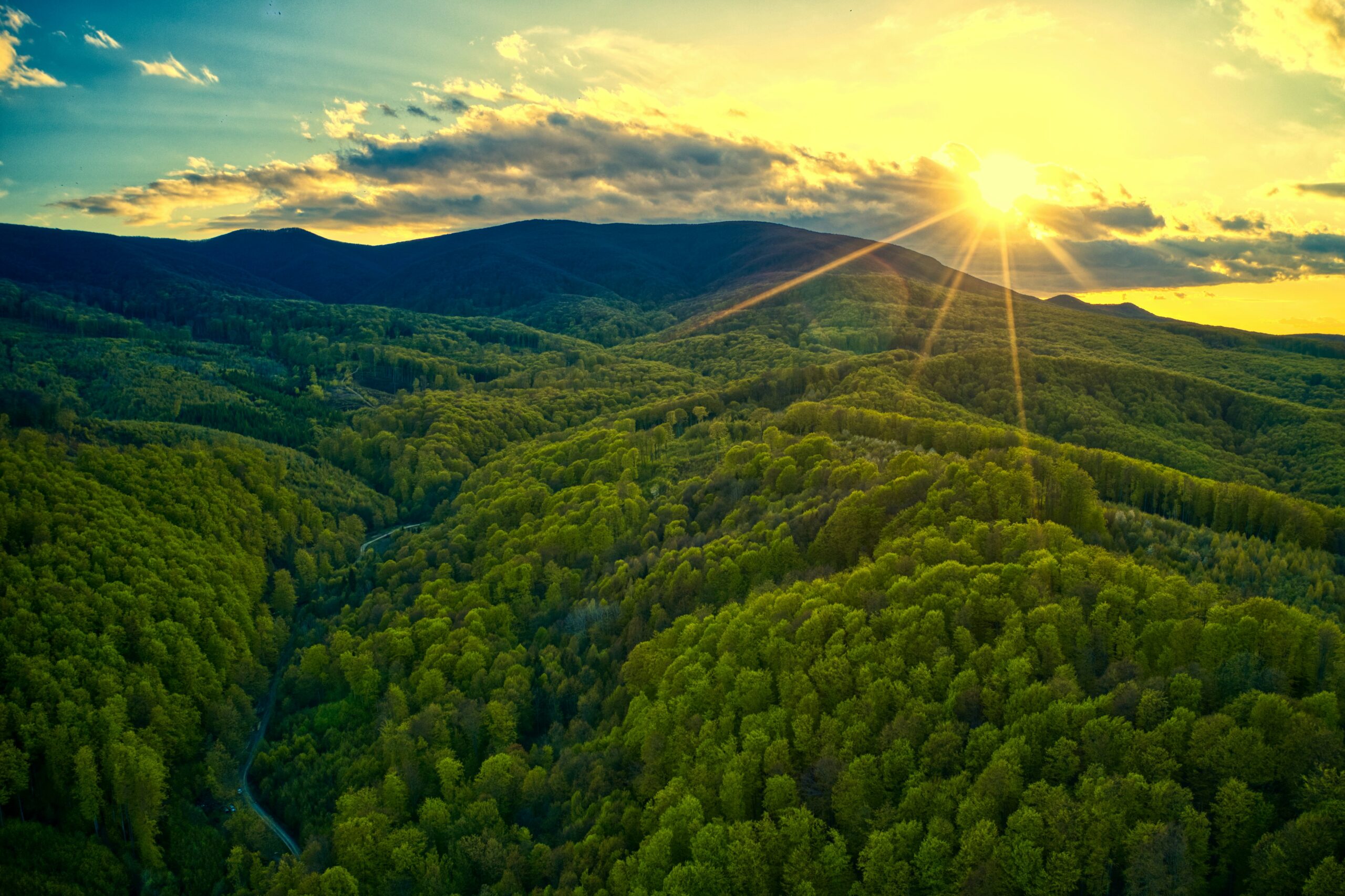
Just beyond the pavilions that hosted these past weeks’ negotiations stretches a vast emerald sea, a mosaic of trees that work like hydraulic pumps. This extraordinary ecological engine produces aerial rivers, atmospheric moisture flows that bring rain across half a continent, sustaining the forest biome. Yet scientists warn that if the Amazon were to lose 25% of its cover, the trees would no longer be able to generate enough humidity to uphold the entire ecosystem. Today, we have already reached 17%.
COP30 will be remembered as the Forest COP, and it became clear from the outset, when at the November 6 Leaders’ Summit, Brazilian President Lula announced the creation of the Tropical Forests Forever Facility (TFFF), an investment fund designed to reward countries that preserve their tropical forests. The symbolism of hosting the thirtieth Conference of the Parties, ten years after the Paris Agreement, in one of the planet’s largest green lungs is unmistakable. So, too, is the gravity of doing so in a region among the most threatened by climate change and deforestation. According to the Amazon Assessment Report 2025, unveiled at COP30, between 2018 and 2022 the Amazon lost roughly 8.6 million hectares of forest — an area larger than Austria — with 78% of deforestation linked to cattle ranching expansion. These numbers illustrate how profit-oriented systems and supply chains underpinning our economies continue to endanger one of the world’s richest forest biomes.
The TFFF aims to disrupt this logic. Through the creation of a multilateral investment facility, it seeks to reward countries that keep their forests standing, demonstrating that conservation can be more profitable than destruction. Conceived as an endowment-style fund, once it reaches a critical mass of capital it will use financial returns to make annual payments to countries that — according to agreed satellite monitoring — maintain forest cover or reduce deforestation. In practice, it does not finance time-bound projects; instead, it provides stable, predictable performance-based payments tied to verifiable outcomes on the ground.
This financial architecture aims to mobilise around USD 125 billion in total — USD 25 billion in public finance and USD 100 billion from private capital — ultimately supporting more than 70 forest-rich developing countries that serve as custodians of these ecosystems. They are expected to govern the fund themselves, with support from the World Bank. So far, about USD 5.5 billion has been pledged: USD 1 billion each from Brazil and Indonesia, and an additional USD 2.5 billion from industrialised nations (including France, the UK, Norway, Germany, and Belgium), largely directed toward protecting the Congo Basin forests.
The TFFF is not the first attempt to safeguard forests through financial innovation. In recent years, carbon credits tied to forest conservation or reforestation have become widespread: each preserved tree corresponds to a measurable amount of carbon kept out of the atmosphere, and one tonne of CO₂ avoided becomes a credit a company can purchase to offset its emissions. But numerous investigations and scientific studies have shown that these methods are often unreliable. Companies frequently buy credits that do not correspond to real emissions reductions. In a recent Nature commentary, Johan Rockström, Director of the Potsdam Institute for Climate Impact Research, bluntly described forest carbon credits as “hot air.”
The TFFF is not free of uncertainties or risks either. Several governments typically active on climate issues have adopted a wait-and-see stance or withdrew from the first round of commitments, signaling the need for clarity around governance, allocation criteria, rights protections, and methods for tracking results. Moreover, because the fund depends on financial market performance, there is a structural risk that forest conservation becomes contingent on market conditions.
Yet one element stands out as a genuine cultural shift. The TFFF would allocate 20% of its payments directly to Indigenous Peoples and local communities, recognised as the most effective guardians of these ecosystems. “The TFFF boldly and justly acknowledges the essential role of Indigenous Peoples and traditional communities in forest protection,” said Brazil’s Minister of Indigenous Peoples, Sonia Guajajara. “Ensuring that at least 20% of resources go directly to these guardians is a historic achievement and a decisive step toward equity and the recognition of ancestral knowledge.” The TFFF underscores the centrality of a scientific approach that is also deeply rooted in social, human, and cultural dimensions. After all, for monitoring systems like the one envisioned by Brazil to work in practice, ground-truthing is essential. Local and Indigenous communities are the only actors capable of providing this type of data consistently and reliably, observing the land, detecting changes, and reporting threats or fires.
This is also where European forest-monitoring efforts become relevant. Projects such as FORWARDS, which is prototyping the ForestWard Observatory, aim to build a pan-European monitoring system to understand how climate change is affecting forests. The goal is to provide tools operating on two levels: a strategic overview at continental and national scale, mapping disturbances, future risks, and vulnerabilities; and more operational information for land managers, supporting assessment of forest condition and guiding restoration practices.
Across both Europe and the tropics, effective monitoring emerges from the union of two perspectives: rigorous, science-based observation from above, and knowledge grounded in the territory, shaped by local values and lived experience.
In Belém, beneath the canopies of sumaúma, andiroba, and jacarandá trees, climate debates are not abstract rhetoric — they are deeply social, infused with activism, and tied to people’s lives. The demonstrations outside the pavilions in recent days made this abundantly clear.
In a way, it is the trees themselves, so quietly benevolent, that connect everything: the moments we set aside to honour them, the COP that debates their fate, and the vast Amazon rainforest that still, meter by meter, helps stabilise the planet’s climate.
Beyond being the “Amazon COP,” Lula said this would also be the COP of truth. Our ecosystems can no longer be squeezed at this pace: now, only actions will show whether that promise holds.