Capturing Perspectives: Forest Quest at Queen Elizabeth Forest Park
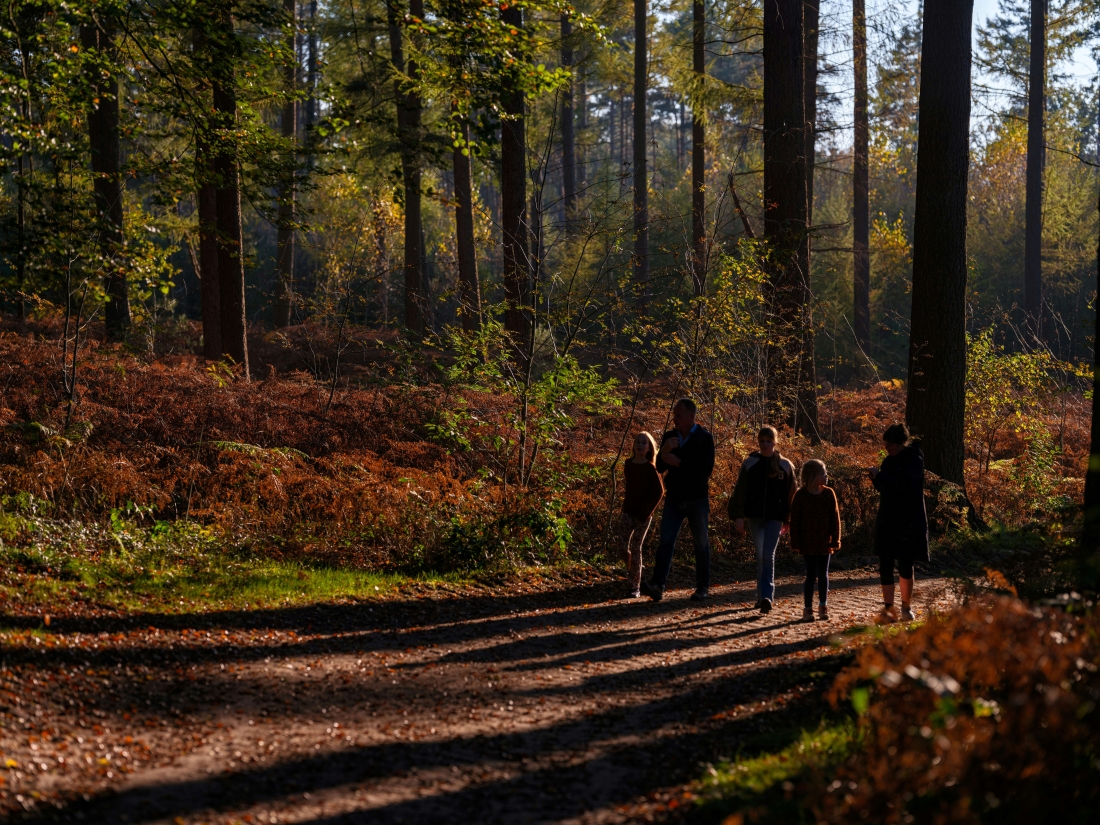
This summer, visitors explored the Queen Elizabeth Forest Park through Forest Quest. In this blogpost, some of them share their photos and stories of discovery, wildlife, and reflection.
This summer, we invited visitors to complete a self-guided interactive trail through the Queen Elizabeth Forest Park (QEFP), in Loch Lomond and the Trossachs National Park, Scotland, to explore climate-smart forestry. Through Forest Quest, families and friends groups experienced the forest in new ways by noticing the trees and wildlife, and reflecting on how forests are managed for multiple purposes. Along the way, our Quest participants shared their photographs, experiences, and observations at themed stops, giving us a glimpse of how people connected with the forest.
Forest Quest was designed to encourage people to slow down, explore, and learn about the forest. The shorter Squirrel Route (1.7 km) offered two accessible stops, while the longer Deer Route (5 km) included five stops. The first two stops were shared by both routes, so everyone had the chance to experience them. Each stop featured a board with information, instructions and a QR code.
At the first stop, Recreation, Forest Quest introduced visitors to how QEFP, once established primarily for timber production, is now managed for multiple purposes, including well-being and outdoor enjoyment. Participants reflected on the joy of walking, watching birds, and taking in the views. Some noted how exploring with nature helps us learn and grow (like trees!)
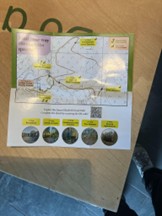
A participant’s photo of the Forest Quest map and leaflet, used to guide their walk through the park.
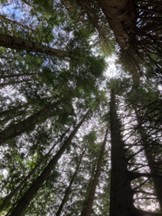
A participant’s photo of looking up through the canopy.
The second stop, Forests and Water, highlighted how streams, ponds, and waterfalls interact with the forest and support wildlife. Families shared the fun of splashing on stones and spotting bodies of water. One participant’s photograph captured a bee deep inside a flower, reminding us of the small yet important connections between forests, water, and biodiversity.
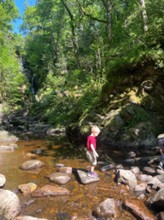
A participant’s photo of their child playing on stepping stones in the stream – one of the fun ways visitors connected with the forest.
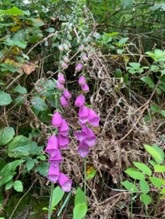
A participant’s photo of a flower where a bee is collecting nectar.
Moving further along the Deer Route, the third stop introduced Continuous Cover Forestry (CCF), a management approach that maintains diversity and resilience by avoiding clear-felling. Here, participants observed the differences in tree size, linked them to growth conditions, and reflected on how CCF can protect soils and support sustainable forest management.
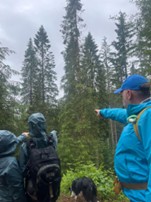
A participant’s photo of their family pointing to the tallest and largest tree they found downhill.
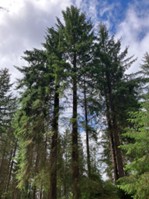
A participant’s photo of the tallest trees they spotted in the area.
At the fourth stop, Tree Diseases, visitors were encouraged to look more closely at larch and other species to raise awareness of the impact of pests and diseases such as Phytophthora ramorum. Some participants noticed how signs of tree diseases can sometimes be tricky to spot, but are important for forest health. It is an exercise that showed how awareness of tree diseases encourages more attentive observation.
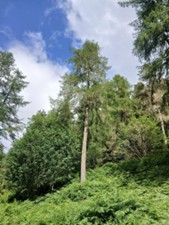
A participant’s photo of coniferous trees, seemingly not showing signs of disease.
Finally, the stop on Natural Regeneration invited visitors to observe how new trees regenerate themselves naturally, either from seeds already in the soil or dispersed by the wind, birds and pollinators. Here, participants appreciated the diversity of tree species in Queen Elizabeth Forest Park. They observed how trees compete for light and how regeneration processes keep the forest dynamic and resilient.
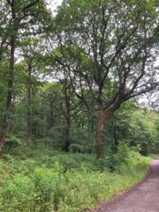
A participant’s photo showing some conifers, looking “like they are finding light at the top of the canopy.”
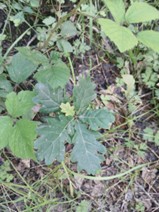
A participant’s photo showing different tree species observed on the ground (new oak saplings naturally regenerating).
A huge thank you to everyone who took part, and to our partners in FORWARDS and SUPERB Projects for making Forest Quest possible. Your photos, stories, and reflections show how engaging with forests can be both fun and meaningful.
If you’re interested in reading more about the Queen Elizabeth Forest Park and how people engage with it, check out this related article from SUPERB.